
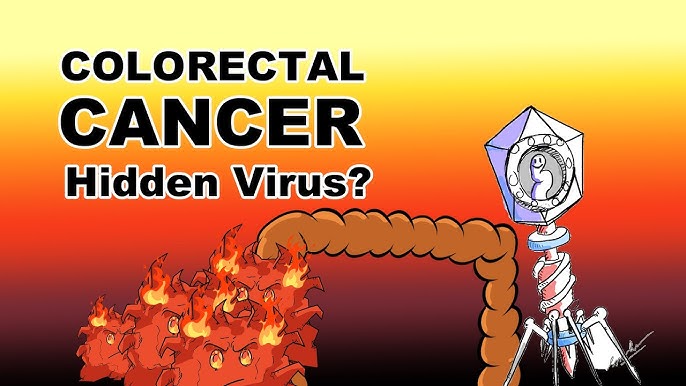
Virus inside gut bacteria may influence colorectal cancer risk. In the video below, Dr Mubeen Syed explains a new study exploring how a hidden virus (a bacteriophage) within certain bacteria could be linked with tumour development. This article summarises the key points in plain English.
What you’ll learn in this video
- Why gut microbiome disruption (dysbiosis) matters in colorectal cancer research
- Why one common bacterium keeps showing up in studies, even in healthy people
- How a virus inside bacteria (a “prophage”) may help explain the difference
Why this research matters right now
Colorectal cancer is a serious health issue. It also appears to be increasing in younger people. Because of that, researchers are looking harder at early drivers of tumour development. The gut microbiome is now a major focus.
Integrative oncology research studies and the gut microbiome
The gut microbiome is the community of microbes living in the digestive tract. When that community shifts out of balance, researchers often call it “dysbiosis”. Dysbiosis shows up repeatedly in colorectal cancer research.
Even so, colorectal cancer is complex. No single factor explains every case. However, the microbiome remains important because it interacts with inflammation and immune signalling every day.
The Bacteroides fragilis puzzle
One bacterium that comes up often is Bacteroides fragilis. Researchers have linked it with colorectal cancer. The problem is simple, though. This bacterium also appears in healthy people.
So the better question becomes: what makes Bacteroides fragilis different in colorectal cancer compared with healthy controls?
What is a bacteriophage (and why should we care)?
A bacteriophage is a virus that infects bacteria. Some phages can integrate into bacteria and stay there. When that happens, the virus becomes a “prophage”.
This matters because a prophage can influence what a bacterium does. In some situations, it can change how the bacterium behaves in the gut. It may also change how it interacts with the body.
What the study found
In the video, Dr Syed discusses a study that compared Bacteroides fragilis from colorectal cancer patients with samples from healthy controls. Instead of stopping at “is the bacterium present?”, the researchers looked deeper.
The standout finding was this: colorectal cancer patients were reported to be roughly twice as likely to have detectable levels of specific phages linked with Bacteroides fragilis (odds ratio 2.05).
What this could mean (and what it doesn’t mean)
This research is interesting because it shifts the focus. It moves from “which bacteria are present?” to “what’s happening inside those bacteria?” That is a big change in thinking.
Still, it’s important not to overreach. This does not prove a simple cause-and-effect story. It also does not justify self-treatment or DIY antimicrobial approaches. Instead, it gives researchers a stronger lead to investigate.
This research suggests the virus inside gut bacteria idea may help explain why some microbial patterns are more strongly associated with colorectal cancer than others.
Key takeaways
- The gut microbiome is strongly linked with colorectal cancer research, especially through dysbiosis.
- Bacteroides fragilis appears in both cancer and healthy groups, which has been confusing.
- A virus inside the bacteria (a prophage) may help explain why some signals look different.
- Phages may become useful as future biomarkers, but the science is still emerging.
Watch the video, then take your questions to your healthcare team
If colorectal cancer is personal for you, use this video to build better questions. Then discuss screening, symptoms, and care options with your qualified health professionals.
General information only. This article is educational and does not replace medical advice or treatment.
Learn more
-
Read about bowel cancer screening and symptoms from Cancer Council Australia.
-
Learn more about the gut microbiome from the National Institutes of Health (NIH).
More from CanSurvive