Complementary therapies for cancer are an increasingly important part of how Australians live well through and beyond a cancer diagnosis. Research shows that more than 56% of Australians with cancer use some form of complementary therapy. They use them to manage side effects, improve quality of life, and feel more in control of their own healing. At CanSurvive Australia, we understand this deeply. This guide explores what complementary therapies for cancer are, what the evidence says, and how integrative oncology can support you at every stage of your cancer journey.
What Are Complementary Therapies for Cancer?
Complementary therapies for cancer are evidence-informed practices used alongside conventional cancer treatment. They are not a replacement for medical care. Instead, they work in partnership with treatments such as surgery, chemotherapy, and radiotherapy.
The Society for Integrative Oncology defines this approach as a patient-centred, evidence-informed field of cancer care. It uses mind and body practices, natural products, and lifestyle modifications from different traditions alongside conventional treatments. The aim is to optimise health, quality of life, and clinical outcomes across the full cancer care continuum.
Furthermore, integrative oncology recognises that people are more than their diagnosis. It supports the whole person — physically, emotionally, and spiritually.
Why So Many Australians with Cancer Turn to Complementary Therapies
The reasons are deeply personal. However, research consistently shows several common motivations.
A systematic review published in Complementary Therapies in Clinical Practice found that 56% of Australians with cancer use complementary therapies. Additionally, research involving more than 1,000 cancer survivors found that 77% believed complementary approaches improved their quality of life. Seventy-three percent said these therapies made them feel more hopeful. Moreover, 71% felt they helped support immune function.
People living with cancer often cope with significant side effects. Fatigue, pain, anxiety, nausea, and sleep disturbances are common. Complementary therapies for cancer offer practical, evidence-supported ways to address these challenges. Importantly, they also help people feel more empowered and active in their own care.
“I have been in active treatment for four-and-a-half years. Integrative oncology has sustained that. I wouldn’t be able to stay on treatment if I didn’t have it.” — Caitlin Delaney, person living with ovarian cancer
What the Evidence Says About Complementary Therapies for Cancer
Evidence is central to integrative oncology. Consequently, the therapies recommended within this field are grounded in clinical research.
The American Society of Clinical Oncology and the Society for Integrative Oncology have developed joint clinical practice guidelines on the use of integrative therapies in cancer care. These guidelines provide evidence-based recommendations for managing pain, fatigue, anxiety, and depression alongside conventional treatment.
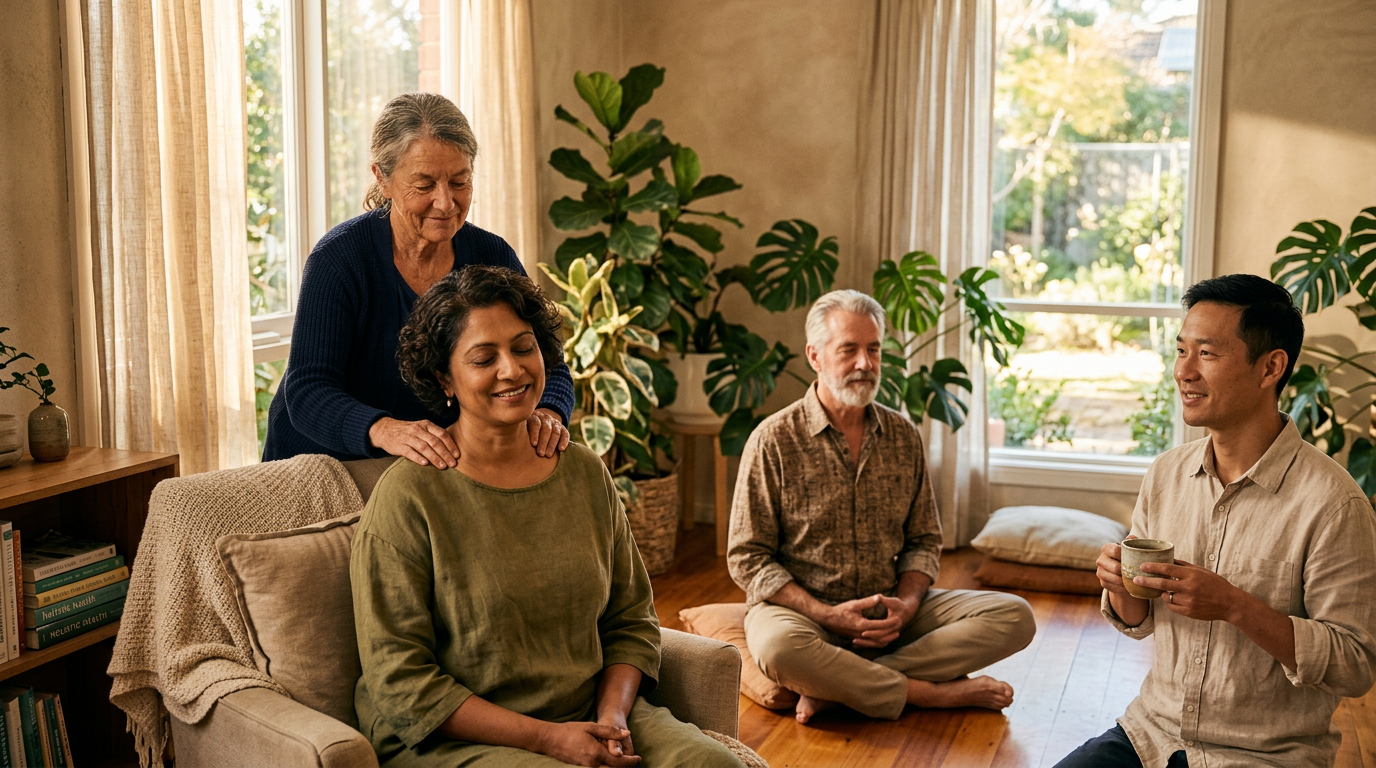
Key research findings are compelling. Acupuncture and acupressure are significantly associated with reduced cancer pain and lower analgesic use. Mindfulness meditation and yoga are recommended for reducing anxiety, stress, and depression during and after treatment. Oncology massage reduces symptom distress and improves quality of life, particularly during chemotherapy. Music therapy and art therapy show meaningful benefits for anxiety, depression, and fatigue. Exercise physiology and movement-based therapies are strongly linked to improved survivorship outcomes.
In addition, a major Australian prospective cohort study involving 1,376 adults receiving cancer treatment found that self-selected complementary therapies significantly improved quality of life and reduced symptom distress over just six sessions. The NICM Health Research Institute at Western Sydney University continues to lead research into complementary medicine and integrative oncology in the Australian context.
Complementary vs Alternative Therapies: An Important Distinction
It is essential to understand the difference between complementary and alternative therapies. They are not the same thing.
Complementary therapies for cancer are used alongside conventional treatment. They are evidence-informed, practised by qualified professionals, and integrated with the knowledge and oversight of your cancer care team.
Alternative therapies, by contrast, are used instead of conventional medical treatment. They typically lack a scientific evidence base. Furthermore, some alternative therapies carry genuine risks, including dangerous interactions with cancer treatments.
Therefore, the integrative oncology model actively supports people to access safe, evidence-based complementary care. If you are using or considering complementary therapies, speak with your oncology team first. Cancer Council Australia also provides helpful guidance on evaluating complementary and alternative therapies.
Common Types of Complementary Therapies for Cancer
Integrative oncology covers a broad range of evidence-informed practices. These are generally grouped into three categories.
Lifestyle Modifications
This category includes therapeutic changes to diet, physical activity, sleep habits, and stress management. It also includes structured programs designed to support people during and after cancer treatment.
These evidence-informed lifestyle changes form a cornerstone of complementary therapies for cancer and are supported by a growing body of clinical research.
Mind and Body Practices
This is one of the most well-researched areas of complementary cancer care. Practices include acupuncture, oncology massage, mindfulness meditation, yoga, tai chi, and music and art therapy. Research consistently supports these modalities for reducing anxiety, fatigue, pain, and sleep disturbance. Additionally, peer support and counselling are recognised as valuable components of holistic cancer care.
Mind and body practices represent some of the most widely used complementary therapies for cancer across Australian integrative oncology centres.
Evidence-Informed Natural Products
This category includes selected vitamins, minerals, herbs, and dietary supplements. However, it is essential that these are used only under the guidance of a qualified integrative oncology practitioner. Some natural products can interact with cancer treatments. Therefore, professional guidance is not optional — it is critical.
When used safely and under professional guidance, evidence-informed natural products can form a valuable part of complementary therapies for cancer support.
How CanSurvive Australia Supports Your Integrative Cancer Journey
At CanSurvive Australia, we offer a range of holistic support programs and educational resources for people affected by cancer on the Sunshine Coast. Our programs are grounded in the principles of integrative oncology. They are designed to complement your conventional treatment, not replace it.
Our services include mindfulness and meditation programs facilitated by Peter Davies, a retired medical practitioner with extensive experience in mind-body approaches to cancer support. Our founder, Eve Williamson, facilitates our in-person cancer support group — a warm, welcoming community for people affected by cancer. You can explore our full range of services at cansurvive.org.au/services.
Additionally, our Healing Hub series brings together leading practitioners to share evidence-informed perspectives on complementary cancer care. Find upcoming Healing Hub events at cansurvive.org.au/events.
We also provide a growing library of educational resources to help you navigate your options with confidence and clarity. Visit cansurvive.org.au/library to explore what is available.
You Do Not Have to Choose Between Treatment and Wellbeing
The evidence supporting complementary therapies for cancer continues to grow, and so does the number of Australians choosing to include them in their cancer care plan.
A cancer diagnosis changes everything. However, you do not have to navigate this journey alone.
Complementary therapies for cancer, delivered within a safe, evidence-informed integrative oncology framework, can genuinely improve quality of life. They can reduce the burden of side effects, support emotional wellbeing, and help you feel more empowered throughout your cancer experience.
As the research makes clear, the question is no longer whether complementary therapies have a role in cancer care. The question is how to access them safely, with proper support and guidance. That is exactly what CanSurvive Australia is here for.
We are here to walk alongside you. Explore our complementary services or contact us if you have any questions.
The information in this article is intended for general educational purposes only. It does not constitute medical advice and should not replace the guidance of your treating oncology team or qualified healthcare professionals. Always consult your doctor or oncology team before commencing any complementary therapy.