
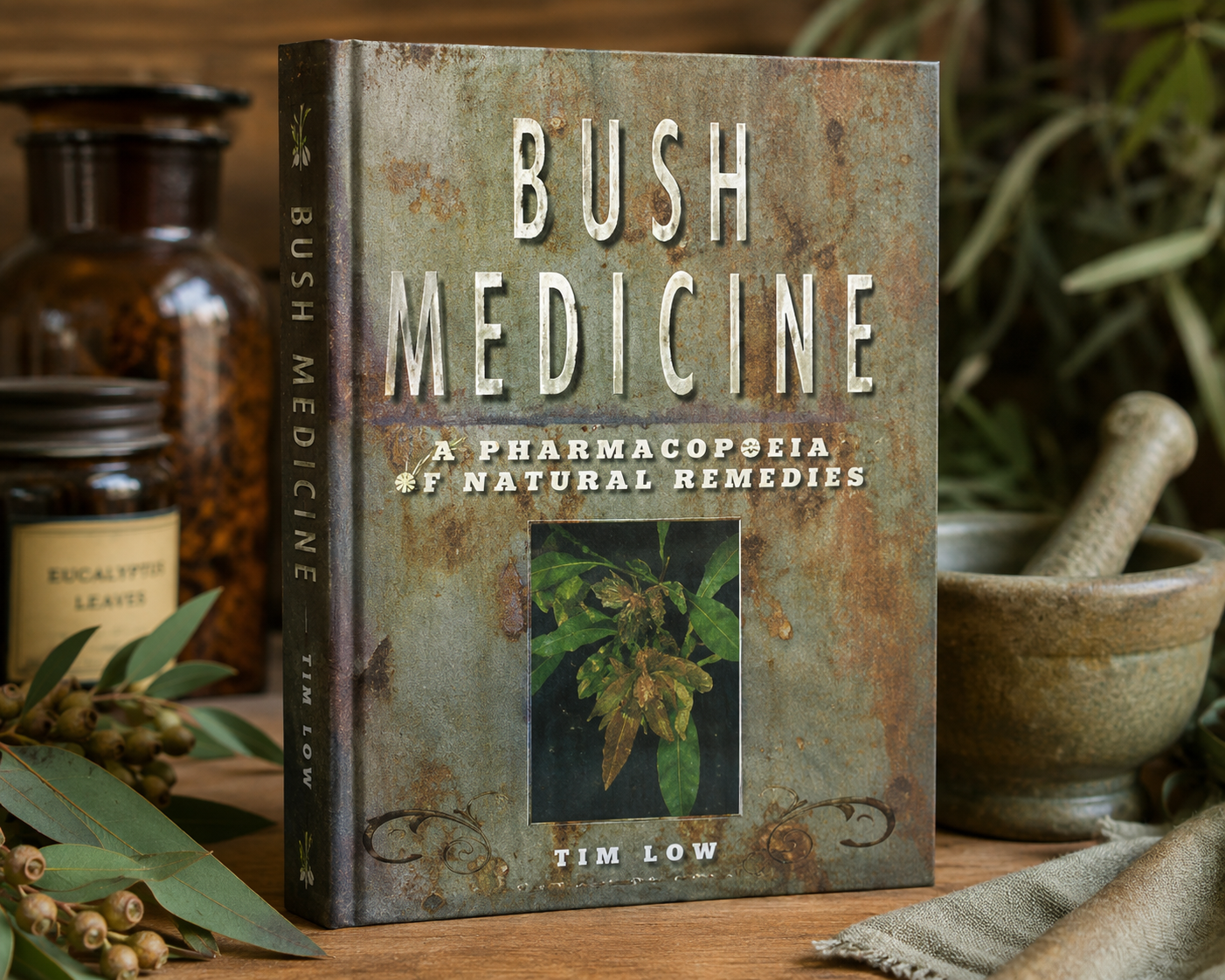
There’s something grounding about connecting with the land you live on—and understanding how the plants around us have been used for healing, for generations, offers both comfort and perspective. Tim Low’s Bush Medicine: A Pharmacopoeia of Natural Remedies, first published in 1990, is a beautifully illustrated guide to the therapeutic plants of the Australian wilderness. For anyone interested in integrative wellness and the deep roots of healing practice in Australia, it’s a remarkable resource.
A Bridge Between Tradition and Modern Understanding
Low’s book opens a window into Aboriginal healing traditions and how early European settlers learned from—and sometimes misunderstood—this knowledge. What’s particularly striking is his honesty: he doesn’t romanticise the past. Instead, he documents how traditional Indigenous healers used specific plants and parts of plants, and then traces what happened when colonial ideas filtered these practices through a European lens.
The Soft Corkwood tree, for instance, contains an alkaloid that was eventually extracted and commercialised to treat shell shock and travel sickness during World War II. The Sandpaper Fig’s rough leaves were traditionally used to physically abrade fungal infections, followed by the fig’s natural latex. These aren’t abstract historical curiosities—they’re stories of people discovering, over centuries, what actually worked.
Exploring the Full Spectrum of Natural Remedies
What makes this book stand out is its refusal to stay narrowly botanical. Low explores animal remedies too—goanna oil, eucalyptus, even the careful use of green ants’ formic acid in traditional skin treatments. He documents remedies from plant roots to clay, offering a genuinely eclectic pharmacopoeia of what the Australian wilderness has offered.
For each plant or remedy, Low grounded his research. He examines the chemical compounds, the traditional uses, and the stories behind them. The Cheesefruit (noni), the She Oak’s use for toothaches, the Pandanus trunk cores used for everything from headaches to digestive support—each entry is both scientifically informed and deeply human.
A Resource for Integrative Wellness
Beyond the history, Low addresses something contemporary and important: the ethics of how traditional knowledge is used today. He highlights the troubling reality of biopiracy—how multinational companies have profited from Indigenous knowledge while the communities themselves were rarely compensated, and sometimes even charged royalties to use their own native plants once patented.
This thoughtful engagement with both the past and the present makes Bush Medicine far more than a historical catalogue. It’s a meditation on connection, on understanding our place in the landscape we inhabit, and on the responsibility that comes with using knowledge that was hard-won by others.
Available to Borrow for Members
Bush Medicine is available to borrow from the CanSurvive lending library—a service available to all members. If you’re exploring integrative approaches to wellness, interested in the Australian connection to natural healing, or simply curious about the plants around you, this is a thoughtful addition to your reading.
Whether you’re looking to deepen your understanding of integrative wellness or simply seeking a beautiful, engaging read about Australian ecology and history, Low’s work remains as relevant and enlightening today as it was when first published.
Membership is $45 per year. Learn more about membership and library access.