
Essential Oils and Prostate Cancer: What Science Really Says
Prostate cancer affects thousands of Australian families every year. In fact, Cancer Australia reports that around 28,900 men will be diagnosed in 2025. That’s roughly one man every 18 minutes. Behind each of those numbers is a person searching for answers, hope, and every reasonable option for support.
Many people ask about essential oils and prostate cancer. You might have heard claims online or from well-meaning friends. Some sound promising. Others sound too good to be true. So what does the actual science say?
This article looks at real peer-reviewed research on three essential oils that keep appearing in cancer studies: frankincense, myrrh, and oregano. We’ll explain what researchers have found, what it means, and what the limits are. Most importantly, we’ll do it in plain English.
What Are Essential Oils, Exactly?
Essential oils are concentrated plant extracts. They’re made by steaming or pressing plant materials like leaves, bark, flowers, or resin. What you end up with is a potent liquid that contains the plant’s natural chemicals.
These aren’t the same as fragrance oils or cooking oils. Essential oils are far more concentrated. A single drop can contain the active compounds from hundreds of plant parts.
Researchers study them because some of these plant chemicals can affect cells in interesting ways. In particular, some appear to damage cancer cells while leaving healthy cells alone. That’s exactly what scientists look for in potential cancer treatments.

The Big Question: Do Essential Oils Work Against Prostate Cancer?
Here’s the honest answer: we don’t know yet.
There are no clinical trials showing that essential oils treat or cure prostate cancer in humans. However, there is laboratory research showing that certain compounds from these oils can kill prostate cancer cells in test tubes and in mice.
That’s a big difference. What works in a petri dish doesn’t automatically work in a person’s body. But it’s still worth understanding what the research shows, and why scientists find it interesting.
At CanSurvive, we follow the research closely and share educational updates through our monthly Healing Hub sessions, where guest speakers explore evidence-informed approaches to integrative cancer support.
Frankincense: The Most Studied Resin
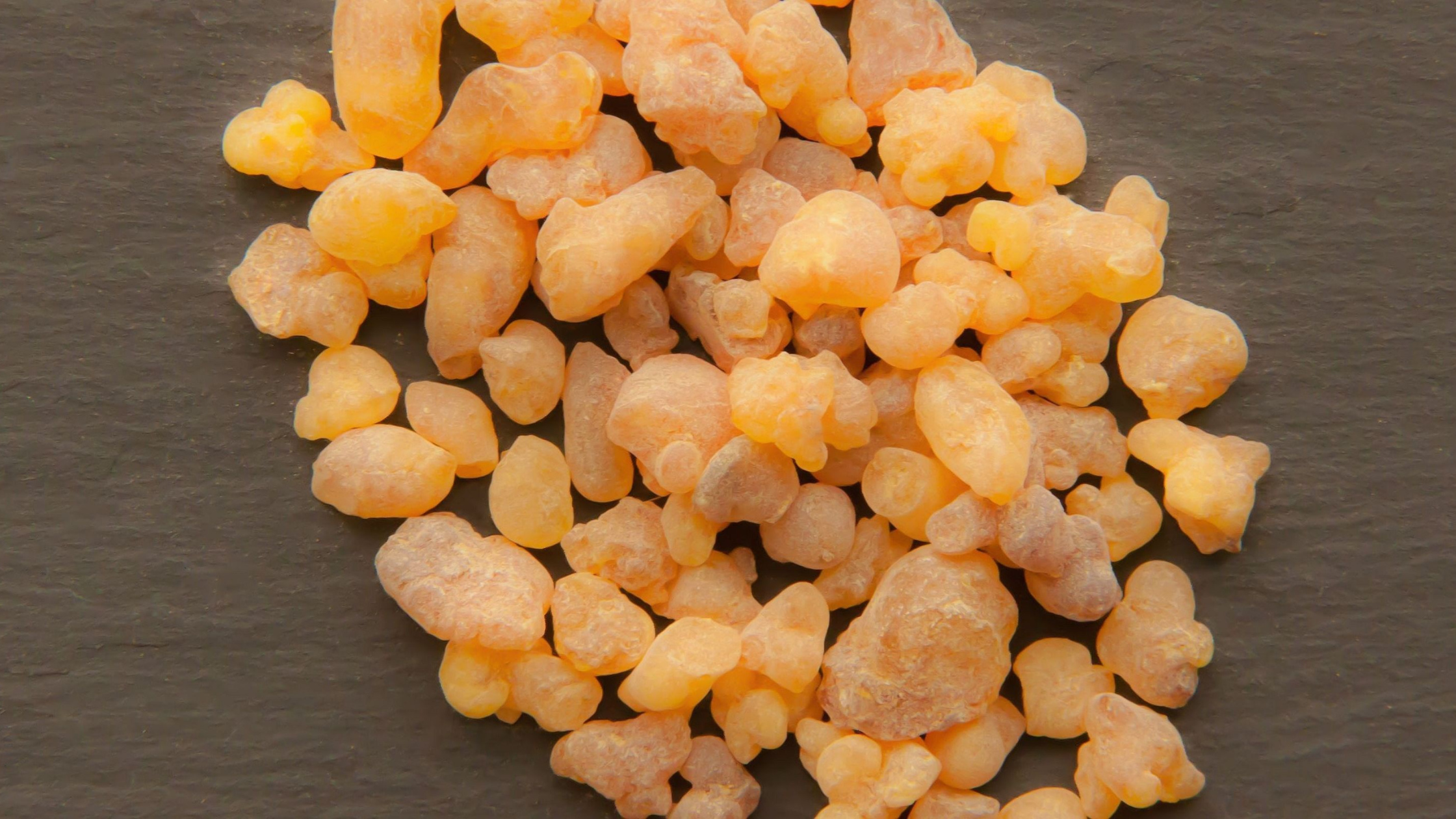
Frankincense comes from the sap of Boswellia trees. When you steam-distil that resin, you get an oil rich in compounds called boswellic acids. The most active one has a long scientific name: acetyl-11-keto-β-boswellic acid. Researchers just call it AKBA.
What the Lab Studies Show
Multiple university research teams have tested frankincense compounds on prostate cancer cells. Here’s what they found:
A 2009 study from the University of Oklahoma looked at how frankincense oil affects different types of cells. The researchers concluded that the oil could tell the difference between cancer cells and normal cells. It suppressed the cancer cells but left healthy cells largely alone.
Several other studies tested AKBA directly on human prostate cancer cell lines. These studies came from respected cancer research centres and were published in peer-reviewed journals:
Researchers at the University of Tübingen in Germany found that AKBA triggered cell death in aggressive prostate cancer cells. It worked both in the lab and in mice. The cancer cells essentially received signals to self-destruct.
Another study gave AKBA to mice with prostate tumours. After 30 days, tumours in the treated mice were about one-tenth the size of tumours in untreated mice. The AKBA appeared to cut off the blood supply that tumours need to grow.
More recently, researchers found that AKBA could even affect prostate cancer cells that had become resistant to chemotherapy. That’s significant because drug-resistant cancer is one of the biggest challenges in oncology.
Has This Been Tested in Humans?
Not for prostate cancer. However, there is one small human trial worth mentioning.
In 2024, researchers at the Medical University of South Carolina tested frankincense extract in 22 women with breast cancer. The women took a standardised extract for about 11 days before their surgery. The researchers then compared tumour tissue from before and after.
In the untreated group, tumour cell division increased by about 55%. In the frankincense group, it decreased by about 14%. That difference was statistically significant.
This tells us that frankincense compounds can reach tumours in living humans and slow down cell division. But breast cancer isn’t prostate cancer, and 11 days isn’t long-term treatment. It’s a promising signal, not proof of effectiveness.
Myrrh: Ancient Medicine, Modern Research
Myrrh is another resin, this time from Commiphora trees. It’s been used medicinally for thousands of years. The essential oil contains compounds called sesquiterpenes.
The Prostate Cancer Connection
A 2022 review published in the journal Pharmaceuticals noted that myrrh showed cytotoxic activity against cancer cells. “Cytotoxic” simply means it kills cells. The review also mentioned myrrh’s anti-inflammatory properties.
More specifically, a 2011 study tested two sesquiterpene compounds from myrrh on prostate cancer cells. These compounds did something particularly interesting: they reduced androgen receptor activity.
Why does that matter? Prostate cancer usually needs androgen hormones like testosterone to grow. The androgen receptor is the lock that testosterone fits into. Many prostate cancer treatments work by blocking that lock. The fact that myrrh compounds can interfere with this system is scientifically meaningful.
An Important Distinction
Here’s something to understand: many myrrh studies use resin extracts dissolved in alcohol or other solvents. That’s chemically different from the essential oil you’d buy in a shop. The compounds are similar, but not identical. Results from extract studies don’t automatically apply to the essential oil.
Oregano and Marjoram: The Carvacrol Effect
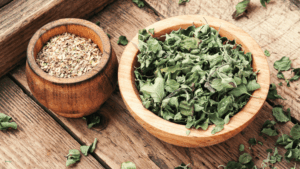
Oregano and marjoram (both Origanum species) contain high levels of two compounds: carvacrol and thymol. These are the molecules that give oregano its distinctive smell and taste.
A 2022 research review stated: “Origanum species are becoming the plants of choice in the fight against cancer” because carvacrol and thymol show anticancer properties in laboratory studies.
What Happens to Prostate Cancer Cells?
Several research teams have tested carvacrol on prostate cancer cell lines:
A 2017 study found that carvacrol reduced the survival of DU145 prostate cancer cells. It triggered a stress response inside the cells that eventually led to cell death. The cells also stopped dividing.
A follow-up study in 2019 showed similar effects on PC-3 cells (another aggressive prostate cancer cell line). Carvacrol switched off signalling pathways that cancer cells use to survive and spread.
Researchers have also tested oregano essential oil encapsulated in tiny particles to help it reach cancer cells more effectively. These studies showed promising results, though one major study was later retracted due to problems with the peer review process. That’s a reminder that not all published research holds up to scrutiny.
A 2024 study on marjoram essential oil from Algeria found it was selectively toxic to prostate cancer cells while sparing normal retinal cells. This selectivity is exactly what researchers look for.
How Do These Oils Actually Work?
When you read through all these studies, four patterns emerge:
First, they trigger cell death. Cells have a built-in self-destruct programme called apoptosis. It’s how your body gets rid of damaged or dangerous cells. These essential oil compounds appear to activate that programme in cancer cells.
Second, they create oxidative stress. Cancer cells already operate under higher stress than normal cells. Adding more stress with compounds that generate reactive oxygen species can tip cancer cells over the edge while healthy cells cope just fine.
Third, they block survival signals. Cancer cells have hyperactive survival pathways with names like NF-κB, Akt, and STAT3. These essential oil compounds appear to jam those signals, making it harder for cancer cells to resist death.
Fourth, they may cut off blood supply. Tumours need to build new blood vessels to grow larger. The frankincense compound AKBA appears to block this process in mice.
The Big Problem: Getting Compounds Into the Body
Here’s a challenge that often gets overlooked: getting these compounds from your digestive system into your bloodstream, and then into a tumour, is difficult.
Studies in healthy volunteers who took frankincense extract orally found very low levels of boswellic acids in their blood. In some cases, the most active compound (AKBA) didn’t appear in blood tests at all.
Even when taken with food, blood levels remained modest. The impressive doses that work in a petri dish are much higher than what actually reaches tissues when you swallow a capsule.
This is called the bioavailability problem. Scientists are working on better delivery systems using nanoparticles and other technologies. But right now, we can’t be sure how much of these compounds actually reach a prostate tumour.
Carvacrol from oregano faces similar challenges. It evaporates easily, doesn’t dissolve well in water, and gets broken down quickly by the liver.
Safety: Essential Oils Aren’t Harmless
It’s crucial to understand that essential oils are potent concentrates. “Natural” doesn’t mean “safe.” Here are the main concerns identified in safety research:
Skin irritation. Undiluted essential oils can burn skin or mucous membranes. Oregano and thyme oils are particularly strong irritants.
Drug interactions. Oregano oil compounds affect liver enzymes that break down medications. This includes some chemotherapy drugs. Taking oregano oil could make medications work differently than intended.
Pregnancy risks. Some essential oils, including oregano, are contraindicated in pregnancy according to essential oil safety databases.
Digestive damage. High doses of carvacrol and thymol have been shown to damage healthy intestinal cells in laboratory studies.
Quality variability. Two bottles labelled “oregano oil” can contain completely different chemical profiles depending on the plant species, growing conditions, and extraction method. Not all products match the research-grade materials used in studies.
Treatment interference. For anyone undergoing active cancer treatment, introducing essential oils without medical supervision could interfere with chemotherapy, radiation, or hormone therapy. Always discuss with your oncologist first.
What the Evidence Supports (and What It Doesn’t)
Let’s be clear about what we actually know:
What the Research Does Show:
- Compounds from frankincense, myrrh, and oregano can kill prostate cancer cells in laboratory experiments
- AKBA from frankincense reduces prostate tumour growth in mice
- Frankincense extract reduced tumour cell division in a small human breast cancer trial
- These compounds work through biologically relevant mechanisms like blocking androgen receptors and cutting off blood supply
What the Research Does NOT Show:
- That any essential oil can treat or cure prostate cancer in humans
- That diffusing these oils or applying them to skin can affect tumours
- What dose would be safe and effective in men with prostate cancer
- Whether these oils work alongside conventional treatment or interfere with it
Where Does This Leave Us?
The laboratory research on essential oils and prostate cancer is genuinely interesting. It’s published in reputable journals by credible research institutions. The mechanisms make biological sense.
However, there’s an enormous gap between promising laboratory results and proven human treatment. That gap includes safety testing, dose-finding studies, pharmacokinetic research, and controlled clinical trials. None of that exists yet for essential oils and prostate cancer.
For Australian men living with prostate cancer, the evidence-based role of essential oils remains supportive, not curative. They may help with anxiety, sleep quality, or general wellbeing when used appropriately under professional guidance. But they are not a substitute for surveillance, surgery, radiation therapy, hormone therapy, or chemotherapy.
If you’re considering essential oils as part of your cancer journey, talk to your oncologist, integrative GP, or a qualified aromatherapist who understands cancer care. They can help you use them safely alongside your conventional treatment, not instead of it.
Our support groups provide a safe space to discuss complementary therapies with others who understand the cancer journey, while our range of integrative services—including infrared sauna therapy and energy healing—focus on quality of life and wellbeing alongside conventional treatment.
The Bottom Line
Science has shown that certain compounds in frankincense, myrrh, and oregano oils can affect prostate cancer cells in meaningful ways. That research is real and valuable.
What we don’t have yet is evidence that any essential oil can safely and effectively treat prostate cancer in living humans. The research is still at the laboratory stage.
For now, honesty and accuracy matter more than hope and hype. Understanding what the research actually shows helps you make informed decisions about your health.
Disclaimer
This article is for educational purposes only and does not constitute medical advice. It is not a recommendation to use essential oils for the prevention or treatment of prostate cancer or any other medical condition. If you are living with prostate cancer or undergoing treatment, please consult your treating doctor, oncologist, or appropriately qualified healthcare professional before using any essential oils or complementary therapies. Essential oils can interact with cancer treatments and may not be safe for everyone.
- University of Oklahoma frankincense study (PMC2664784): https://pmc.ncbi.nlm.nih.gov/articles/PMC2664784/
- AKBA mouse study Pang et al. 2009 (PMC2724674): https://pmc.ncbi.nlm.nih.gov/articles/PMC2724674/
- MUSC breast cancer trial 2024 (PMC10959833): https://pmc.ncbi.nlm.nih.gov/articles/PMC10959833/
- Myrrh review 2022 Pharmaceuticals (PMC9416713): https://pmc.ncbi.nlm.nih.gov/articles/PMC9416713/
- Myrrh and androgen receptor study Wang 2011 (PMC4002774): https://pmc.ncbi.nlm.nih.gov/articles/PMC4002774/
- Origanum review 2022 (PubMed 35414316): https://pubmed.ncbi.nlm.nih.gov/35414316/