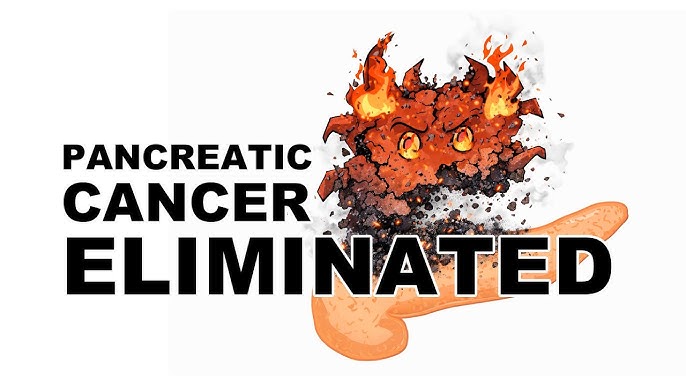
Pancreatic cancer resistance is one of the harsh realities of this disease. Treatments can look promising at first, then the cancer adapts. It finds another route. And suddenly, what worked yesterday doesn’t work today.
In the video above, Dr Mubeen Syed explains a study that tackled this exact problem. The research was done in mice, not people. However, the idea is worth understanding because it targets the reason resistance happens in the first place.
Important note: This article is for education only. It is not medical advice. Always talk with your treating team before making treatment decisions, and especially before adding supplements or therapies.
Pancreatic cancer resistance: the “main engine” and the “backup engine”
Here’s the simplest way to think about what the video explains.
- Main engine: Many pancreatic cancers (often called PDAC) rely heavily on a growth pathway driven by KRAS signalling.
- Backup engine: When you block the main engine, some cancer cells switch on a separate survival pathway. In this research, STAT3 was described as that backup.
So the problem isn’t only “can we slow the cancer down?” The problem is, “how do we stop the cancer from switching to Plan B?” That’s pancreatic cancer resistance in a nutshell.
Pancreatic Cancer Treatment Resistance: what the study tested in mice.
What The researchers tested a strategy that hit three different points in the cancer’s signalling network at the same time. The goal was straightforward: shrink tumours and reduce the chance of resistance.
In the video, the key message is that a triple approach led to tumour regression in mouse models, and the researchers reported no evidence of tumour resistance for a long observation period after treatment. That is not a human cure. Still, it is a meaningful preclinical result.
If you want to read the original study, it is here:
- PNAS (paper): https://www.pnas.org/doi/10.1073/pnas.2523039122
- PubMed record: https://pubmed.ncbi.nlm.nih.gov/41329731/
PDAC Resistance: why this matters (without the hype).
Let’s be clear. Mouse studies are not the finish line. They are one step on the road.
But pancreatic cancer resistance is one of the biggest reasons outcomes remain so challenging. When research directly targets resistance, it’s worth paying attention. It can guide future clinical trials. It can also sharpen the questions patients and families ask their care team.
For trusted Australian information on pancreatic cancer, Cancer Council Australia is a solid starting point:
https://www.cancer.org.au/cancer-information/types-of-cancer/pancreatic-cancer
Resistance in pancreatic cancer: questions to take to your medical team.
If this video leaves you curious (or hopeful, or both), here are practical questions you can take to your next appointment. They keep you grounded while staying open-minded.
- Are there any clinical trials suitable for my diagnosis and stage?
- Has my tumour been tested for key mutations or markers that influence treatment choices?
- If we discuss new or emerging treatments, what evidence level are we talking about (lab, animal, early trial, phase 3)?
- What support options can help with symptom management, stress, sleep, appetite, and fatigue?
Those last points matter because cancer care is more than tumour shrinkage. Quality of life is not “extra”. It’s essential.
Integrative support for pancreatic cancer resistance.
At CanSurvive, we focus on gaining valuable research and a greater understanding of holistic, non-invasive cancer treatments and therapies. We also support people to make informed choices alongside their medical care.
That includes sharing evidence-based research on traditional and complementary care, plus access to support, education, and resources. Many people look into complementary therapies for cancer patients and mind-body techniques for cancer support to help manage the load that cancer brings.
To be blunt (because you deserve honesty): complementary support should not replace medical treatment. Instead, it can support wellbeing alongside it. This is where integrative oncology research studies and reputable education can help people make safer, calmer decisions.
Explore more on CanSurvive
- Latest Research: https://cansurvive.org.au/category/latest-research/
- Helpful Resources: https://cansurvive.org.au/helpful-resources/
- Services: https://cansurvive.org.au/category/cansurvive-services/
- Upcoming Events: https://cansurvive.org.au/category/events/upcoming-events/
- Shop: https://cansurvive.org.au/shop/
- Contact: https://cansurvive.org.au/contact/
Further reading (for the research-minded)
- PNAS paper: https://www.pnas.org/doi/10.1073/pnas.2523039122
- PubMed record: https://pubmed.ncbi.nlm.nih.gov/41329731/
- CNIO news release (research group update): https://www.cnio.es/en/news/the-group-led-by-barbacid-at-cnio-completely-eliminates-pancreatic-tumours-in-mice-with-no-resistance-developing/
- Cancer Council Australia – pancreatic cancer overview: https://www.cancer.org.au/cancer-information/types-of-cancer/pancreatic-cancer
- Cancer Australia – pancreatic cancer statistics: https://www.canceraustralia.gov.au/cancer-types/pancreatic-cancer/pancreatic-cancer-australia-statistics
- Cancer Council Australia – complementary therapies: https://www.cancer.org.au/cancer-information/treatment/complementary-therapies
If you want help navigating research like this (without spiralling down the internet rabbit hole at 2am), reach out. That’s why we’re here.