
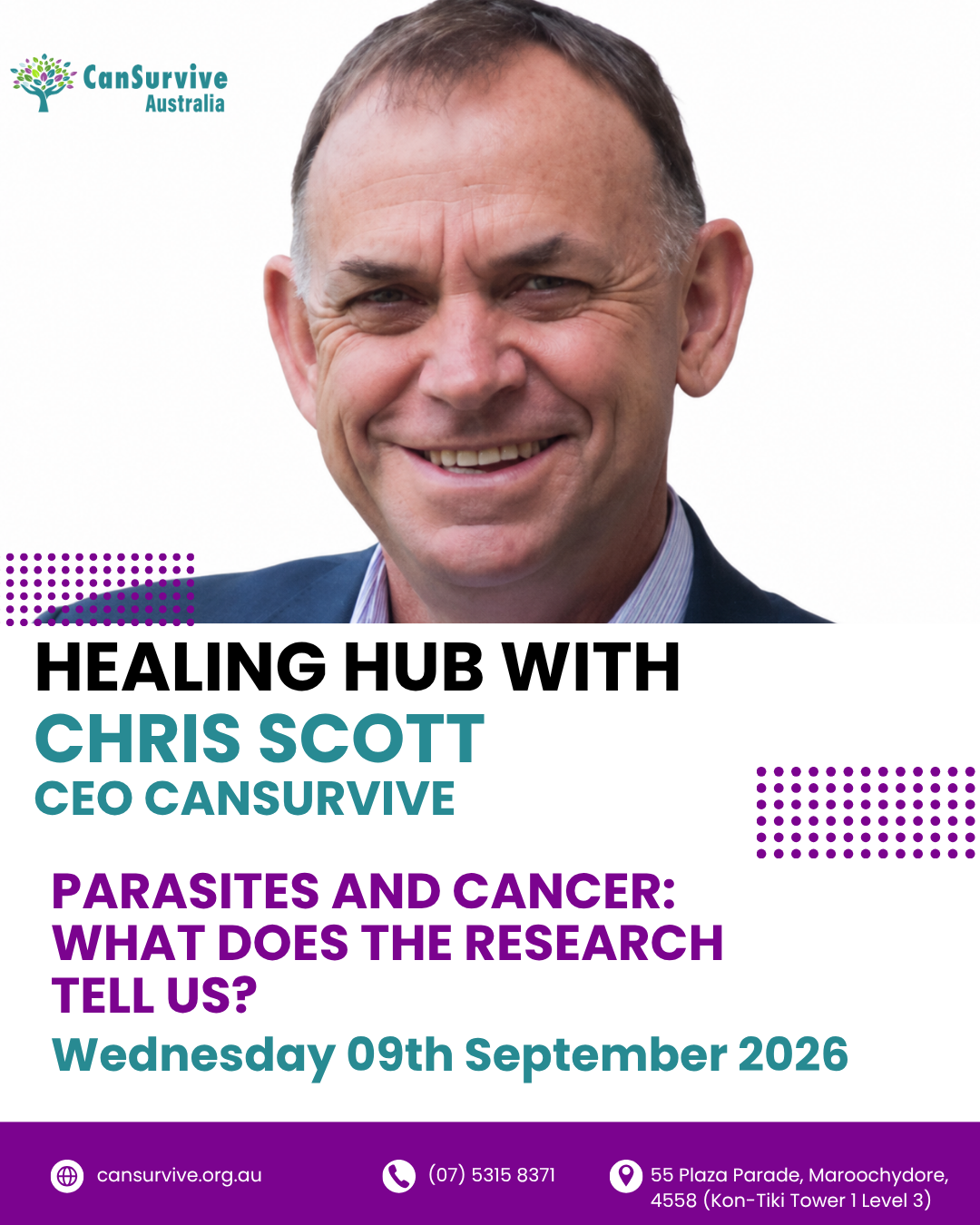
Presented: Wednesday 9 September 2026
Speaker: Chris Scott
Series: CanSurvive Australia Healing Hub
Overview
Is cancer a parasite, or is there a deeper biochemical reason why antiparasitic drugs like Ivermectin and Mebendazole show anti-cancer activity?
In this presentation recorded for CanSurvive Australia, Chris Scott (CEO of CanSurvive Australia) explores the myths, facts, and underlying science surrounding parasites, cancer cell biology, and repurposed pharmaceuticals.
While simple logic might suggest that an antiparasitic drug targets a parasite, cancer cells and parasitic organisms are fundamentally different. Cancer arises from genetic and environmental mutations in normal host cells, leading to uncontrolled growth, loss of cellular adhesion, and invasion. Parasites, by contrast, are distinct external organisms dependent on a host for survival.
This talk dives into observational cohort data, real-world clinical outcomes, and the 14+ distinct biochemical mechanisms through which repurposed drugs attack cancer cells across non-overlapping pathways.
Key Topics Covered in This Video:
- Myth vs. Fact: Addressing the misconception that if an antiparasitic drug targets cancer, cancer must be a parasite.
- Cancer Biology vs. Parasites: Comparing uncontrolled cell replication, immune evasion, tissue metastasis, and host dependence.
- The Nobel Prize-Winning History of Ivermectin: From Satoshi Ōmura’s discovery in Japanese soil to global antiparasitic and anti-cancer research.
- Real-World Clinical Evidence: Observational cohort results from 197 patients showing an 84.4% overall clinical benefit ratio and 48.4% tumor regression/no evidence of disease.
- Biochemical Anti-Cancer Mechanisms: Ivermectin: Inhibiting cancer cell proliferation, metastasis, angiogenesis, and mitochondrial function across 12+ cancer types. Mebendazole: Microtubule disruption, cell cycle arrest, apoptosis, and disruption of glucose metabolism.
- Synergistic Targeting: Depleting cancer stem cells and reversing multi-drug resistance.
- Economics of Drug Repurposing: Comparing low-cost repurposed protocols (under $2,000/year) against standard chemotherapy ($111,000/year) and discussing why randomized trials remain unfunded.
- Audience Q&A: Human vs. veterinary drug formulations (Mebendazole vs. Fenbendazole), gut microbiome impacts, and concurrent conventional cancer treatments.
Watch the full video presentation:
Presentation: 20260909 Healing Hub Presentation
This presentation is provided for educational purposes only and does not constitute medical advice. Please seek advice from appropriately qualified healthcare professionals regarding your personal circumstances and healthcare decisions.