Cancer-related fatigue is one of the most persistent challenges survivors face. Whether you’re in active treatment or months into recovery, that bone-deep exhaustion doesn’t always respond to rest alone. It’s tied to how your body manages energy at a cellular level — and electrolytes like potassium play a quieter but vital role.
Cancer treatment disrupts electrolyte balance. Chemotherapy, radiation, and even the stress response itself can affect how your cells retain and use potassium, magnesium and sodium. The result is compounded fatigue, muscle weakness, and slower energy recovery. While you can’t supplement your way out of cancer-related fatigue, supporting your body’s electrolyte foundation can help you feel more stable and recover more effectively.
What Potassium Does (And Why Cancer Survivors Need It)
Potassium is the primary electrolyte inside your cells. It regulates nerve signals, muscle contraction and how your body converts food into usable energy. Without adequate potassium, you experience weakness, muscle cramps and that particular kind of fatigue where even small tasks feel overwhelming.
During and after cancer treatment, your body is working overtime to repair damage and rebuild. Your cells need potassium to function efficiently. If treatment has depleted your reserves — or if your diet has shifted away from potassium-rich foods due to appetite changes or nausea — that deficit compounds fatigue.
Whole-Food Sources: Practical and Sustainable
Supplements can help, but whole foods deliver potassium in a form your body recognises and uses effectively. Here are the most accessible, potassium-dense options:
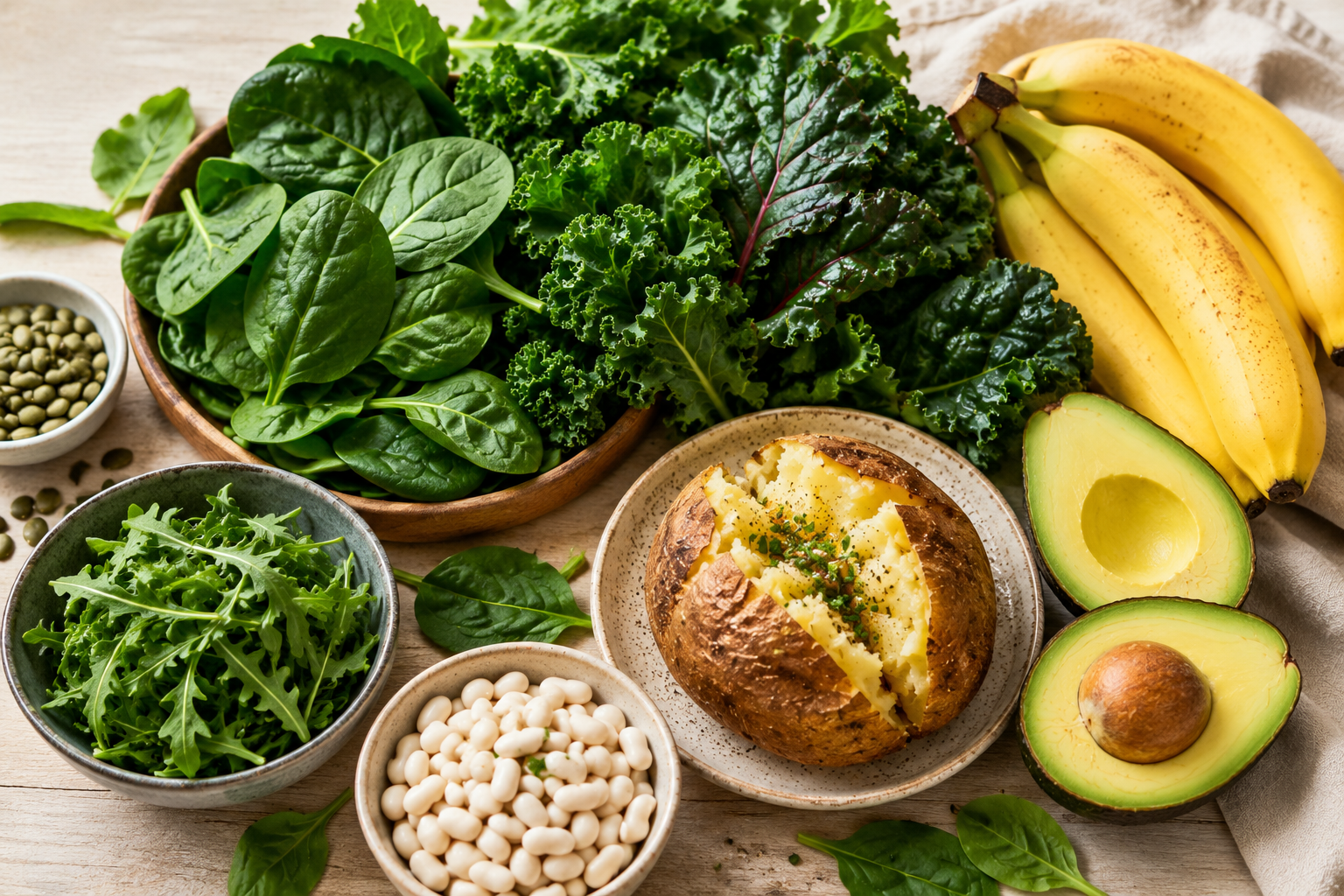
- Beet greens and spinach — 800+ mg per cup. Gentle on digestion and easy to add to smoothies or soups.
- Baked potato with skin — 900+ mg. A warming, grounding food many survivors tolerate well.
- Avocado — 450+ mg each. Nutrient-dense and soft; good if your appetite or digestion is sensitive.
- Bananas — 400+ mg each. The classic potassium food; often tolerated during and after treatment.
- Beans and lentils — 600–900 mg per cooked cup. Protein + potassium + sustained energy.
- Squash (acorn, butternut) — 600+ mg per cup. Comforting and nutrient-dense.
- Parsley — Another potassium-rich herb worth incorporating into meals.
The goal isn’t to chase numbers. It’s to weave potassium-rich foods into meals you actually want to eat. If leafy greens make you nauseous, a baked sweet potato with cinnamon might be the move instead. Your body — and your treatment journey — is unique. For more on nutritional therapies for cancer recovery, including how to build sustainable eating patterns, we have detailed resources available.
The Bigger Context: Regulatory and Industry Perspectives
There’s growing conversation in the integrative health community about how regulatory limits on potassium supplements, the role of processed foods in electrolyte depletion, and pharmaceutical approaches to managing electrolyte-related conditions shape survivors’ options. Dr. Bill McGraw, who partners with CanSurvive on our Town Hall Forum series and also offers frequency therapy, has created a detailed video exploring these themes: “The Hidden Power of Potassium: Why This Essential Electrolyte Is Being Suppressed”.
If you’re interested in that broader discussion — the regulatory decisions, the industry incentives, and what some practitioners argue — it’s worth exploring with the same critical eye you’d bring to any source. But it reflects perspectives that matter to many people navigating survivorship and preventative health.
When to Talk to Your Care Team
If you’re on certain medications (particularly diuretics, some blood pressure medications, or chemotherapy agents), your kidney function and electrolyte levels need monitoring. A conversation with your oncologist, GP or integrated health practitioner is essential before making big shifts to your diet or considering supplements. Some survivors need to be cautious with potassium; others benefit from careful attention to intake. Your individual situation matters.
Integration, Not Replacement
Potassium supports your body’s foundation. Better electrolyte balance can mean steadier energy, fewer muscle cramps, improved glucose stability and a general sense of resilience. Like other integrative approaches — whether it’s turmeric for inflammation or other botanicals — potassium works as part of a whole picture: sleep, movement, stress management, nutrient-dense food, and ongoing support from your care team.
If fatigue is overwhelming, bring it up. If you’re noticing patterns — certain foods help, certain foods don’t — listen to that. Your body knows what it needs.
Health Disclaimer: This content is for educational purposes only and does not constitute medical advice. Always consult with your oncology team, GP or integrated health practitioner before making changes to your diet or starting supplements, particularly if you’re on medication or have kidney concerns.